
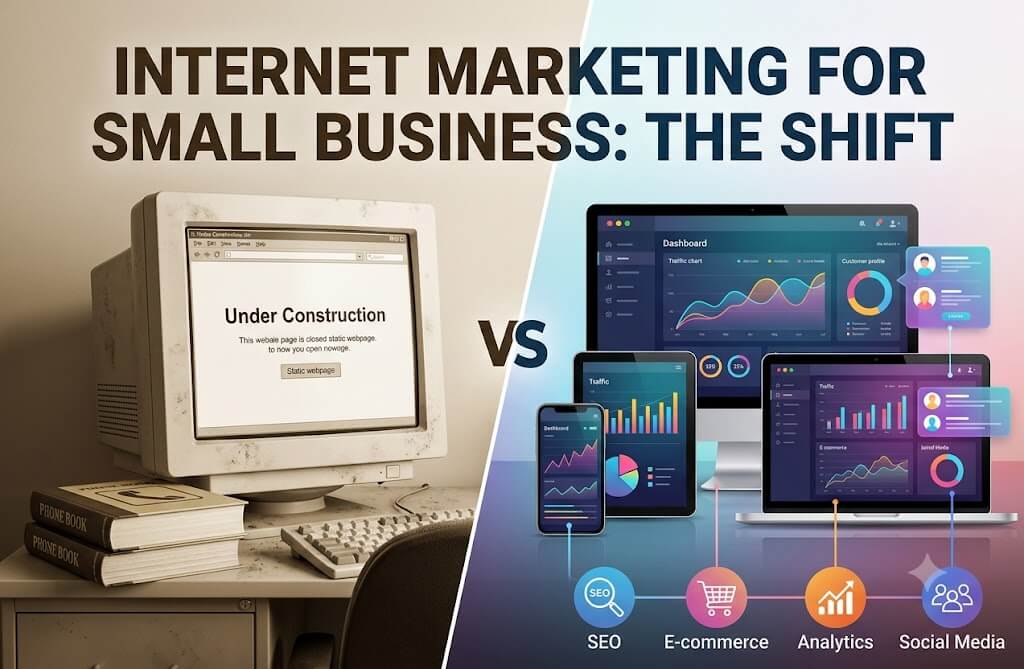
Small business owners face a crowded digital landscape where tactics that worked a few years ago no longer move the needle. Building an online presence is no longer just about launching a basic website and posting occasionally on social media; it requires a targeted, data-driven strategy. To get a real return on your marketing budget, you must focus on modern user behaviors, clean analytics, and channels where your active buyers actually spend their time.
Here is how small business marketing has shifted, and how you can position your business to win today.
Digital marketing moves incredibly fast. If your strategy is still relying on advice from five or ten years ago, you are likely losing leads to competitors who have adapted.
| Marketing Element | The Old Way | The New Way |
| Website Setup | A simple “online business card” website with basic text. | A fast, mobile-first website optimized for conversion and search intent. |
| Analytics | Tracking raw pageviews and simple visitor counts. | Event-based tracking (like GA4) focusing on user engagement and conversion paths. |
| Social Media | Trying to post on every single platform (MySpace, Google+, etc.). | Focusing deeply on 1–2 platforms where your core audience actively engages. |
| Content & SEO | Simple keyword placement and generic blog posts. | Solving specific customer problems, building authority, and addressing local search intent. |
It is Marketing 101, but it is always worth repeating: you must learn as much about your target audience as possible. However, customer shopping habits have shifted.
Today’s consumers do not just search for a service; they search with highly specific intent. They use voice search, ask AI tools for recommendations, and expect instant answers on mobile devices. If you do not understand how your customers interface with the digital world, your marketing efforts will miss the mark.
Anyone can build a basic website using templates, but templated “box” website builders often leave small businesses restricted. They frequently lack the clean code, speed optimizations, and customized structures required to rank on search engines or process complex e-commerce sales.
When choosing a digital marketing strategy, always review a team’s portfolio of work. Ask hard questions about their experience with:
Conversion rate optimization (CRO)
Modern search engine optimization (SEO)
Advanced web analytics and lead tracking
A specialized team ensures your website is built as a lead-generation tool, not just an expensive digital brochure.
Running a website without data tracking is like driving with your eyes closed. You lose out on vital business intelligence that can directly grow your sales.
Basic metrics like overall traffic are still useful, but modern platforms allow you to see exactly how users interact with your content. You can track form submissions, button clicks, video plays, and precise drop-off points in your sales funnel. Choosing and configuring the right analytics platform is one of the most critical steps to understanding your return on investment (ROI).
Marketing is a science, not just an art. Whether it is once a week or once a month, analyzing your website data provides actionable insights.
Careful analysis can reveal hidden opportunities. For example, you might discover that a specific blog post is driving high traffic, allowing you to add a stronger call-to-action to that page to capture leads. Regular data reviews allow you to quickly recalibrate your website and marketing spend to focus purely on what works.
Only massive corporations have the resources to run active, high-quality campaigns across every social platform. A small business does not need to be on Instagram, TikTok, Facebook, LinkedIn, YouTube, Pinterest, and X all at once.
Keep it simple: Hang out where your customers congregate.
Local retail or food services often see the best results utilizing platforms like Instagram, local Google Business Profiles, or local maps.
B2B companies should focus their energy almost exclusively on LinkedIn to connect with decision-makers.
Visual brands (home remodeling, boutiques) find their highest return on highly visual platforms like Pinterest or Instagram.
Focusing your energy on one or two channels allows you to build a highly engaged, authentic community rather than spreading your resources too thin.
Building a digital strategy can feel intimidating, but a well-thought-out website and online presence will give your small business a massive competitive advantage.
If you are uncertain about your customers’ technology habits, how to design your next website, or how to launch an effective local marketing campaign, we can help. Partnering with a skilled team ensures your digital presence quickly achieves a measurable ROI.
Ready to grow your business? Contact us today to speak with our team of digital marketing experts.