Starting a business does not always mean starting from zero.
The owner of CLA Concrete had already spent years working in the construction industry. He knew the work. He understood concrete. He had the hands-on experience that customers ultimately depend on.
What he did not yet have was a company of his own.
When he decided to make that transition, CLA Concrete needed more than a logo and a website. It needed the basic infrastructure that would allow an experienced contractor to step into the market as an independent business customers could find, understand, trust, and hire.
For IMPROZ, the project reinforced an important lesson about small-business marketing:
Experience may already exist before the business does. The job of marketing is to make that experience visible.
Helped an experienced contractor establish a professional business presence as he transitioned into company ownership
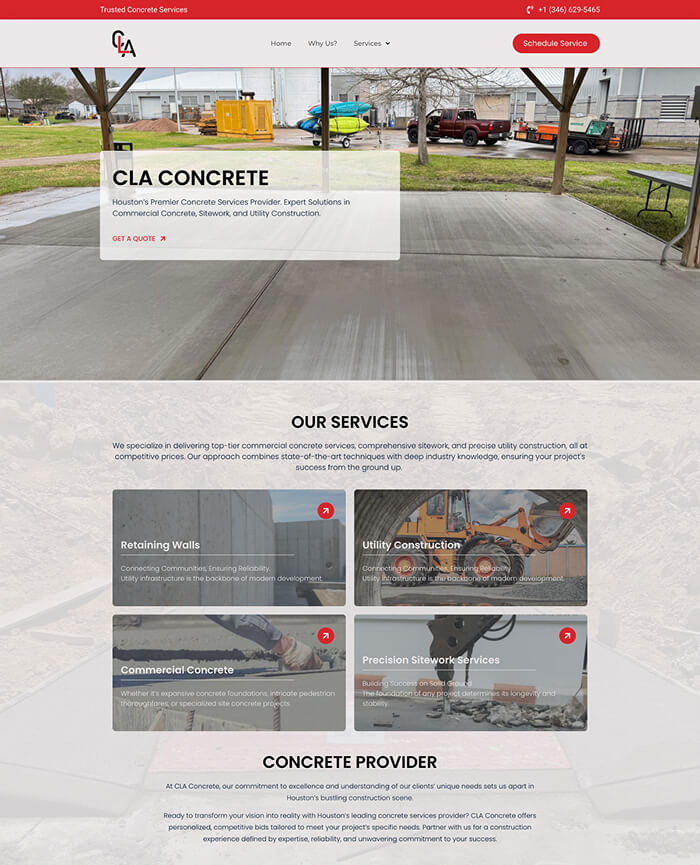
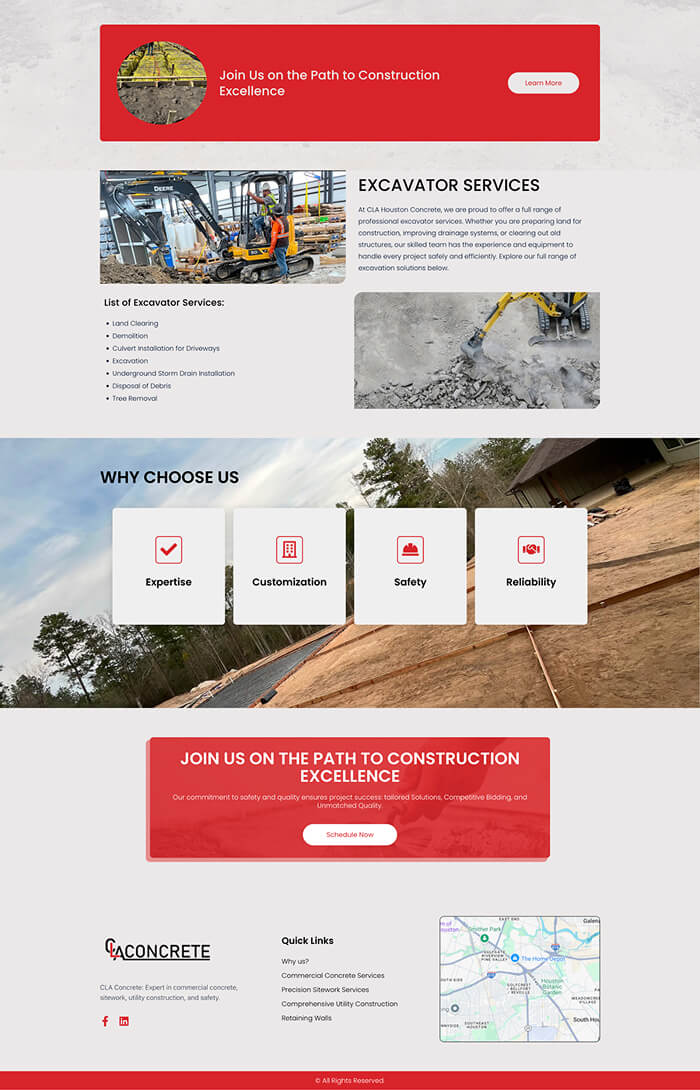
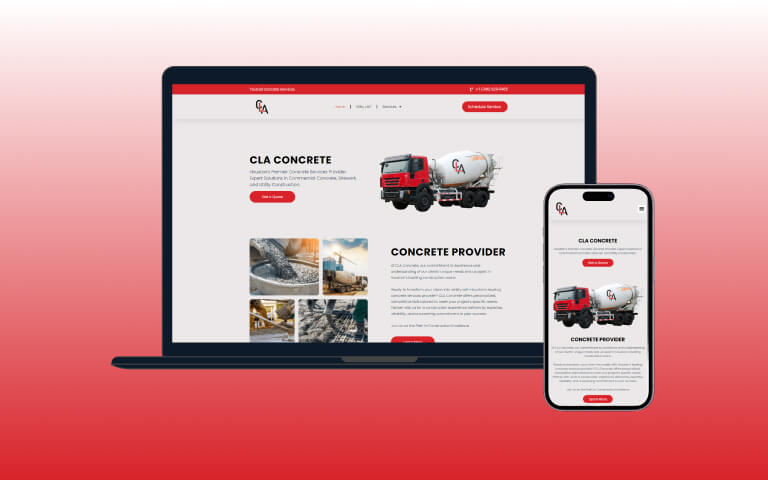
Built a focused website designed to communicate CLA Concrete’s services and credibility without overbuilding the project
Used the Booster Website Program as a practical foundation for a new small business
Created a digital destination that could support advertising, search visibility, and customer inquiries
Launched Google Ads to reach people already searching for concrete services
Began building local search visibility while the new company developed its longer-term reputation
Generated service inquiries shortly after launching paid advertising
Created a foundation that allowed the owner to begin building a customer base under his own company rather than someone else’s
Industry: Concrete / Construction
Services Provided: Booster Website Program, Website Design, Local SEO, Google Ads
Goal: Help an experienced contractor establish an independent business, present himself professionally online, and begin generating opportunities for the new company.
CLA Concrete began with a situation common across the trades.
The owner had spent years working for other companies.
He already understood the actual work customers would be hiring him to perform.
What changed was ownership.
Going out on his own meant that the experience once represented by someone else’s company now had to become the foundation of his own.
That created a different kind of challenge.
The question was no longer:
“Can he do the work?”
It was:
“How do we help the market recognize that he can?”
Experienced professionals sometimes underestimate how much established businesses accumulate over time.
A familiar company name.
A website.
Reviews.
Search visibility.
Referrals.
Photos.
Advertising history.
Brand recognition.
Years of digital signals that reassure customers that the company is real and established.
A new business begins without most of them.
That can create an unusual gap: the person behind the business may have years of legitimate experience while the company itself looks like it appeared yesterday.
CLA needed to close that gap.
Potential customers encountering CLA Concrete online did not automatically know the owner’s history.
They could not see the years he had already spent learning his trade simply by seeing a new company name.
The marketing therefore had an important job:
Translate existing experience into visible credibility.
We did not need to manufacture expertise.
We needed to present the expertise that was already there.
Referrals are powerful in construction.
But referrals generally come after customers.
A new company faces a timing problem.
It needs projects to build a customer base, but it also needs a customer base to generate referrals and reputation.
CLA needed a way to reach people looking for concrete work before organic word of mouth had enough time to develop.
That meant the launch needed both a professional foundation and a way to generate immediate market exposure.
The strategy was built around a simple idea:
Give the new business enough professional infrastructure to compete now while creating a foundation it could continue building on later.
CLA did not need a massive website. It needed the right website. As a new business, the priorities were straightforward:
That made CLA a natural fit for our Booster Website Program.
Booster is designed for situations like this: businesses that need a professionally built digital foundation without taking on more website than the business currently requires. The goal is not to build the smallest possible website. It is to build the right-sized website around the business’s current needs.
Learn more about the Booster Website Program.
The website needed to help customers make an important connection:
CLA might be a new company, but the person behind it was not inexperienced.
That meant creating a clean, professional presentation around the business and its services rather than allowing “new company” to feel like “unproven contractor.”
Good small-business website design often works this way.
The website is not creating the value.
The value already exists in the owner, the service, the workmanship, and the experience.
The website’s job is to communicate that value clearly enough that someone who has never met the owner can begin trusting the business.
A new business website has to do more than establish that the company exists.
It needs to help sell.
For CLA, that meant creating a clear path from:
search → website → understanding → inquiry
Prospective customers needed to be able to identify what the company did, determine whether its services matched their project, and understand how to contact the business.
That also made the website the central destination for the next part of the strategy.
Paid advertising could support the immediate launch, but we did not want the company to depend exclusively on paid traffic. Local search needed to begin developing at the same time.
The website was therefore built with local search in mind so the business could begin establishing relevance for its services and market. That created two different time horizons.
Google Ads could help create opportunities now.
Local SEO could begin building visibility for later.
A new business benefits when those two timelines work together rather than waiting until years later to begin thinking about organic search.
CLA did not need one marketing tactic.
It needed a sequence.
The owner already had the trade experience.
The company needed an identity.
The identity needed a professional digital presence.
The website needed visibility.
Advertising needed somewhere credible to send people.
Search visibility needed time to develop.
Each element supported the next.
That is why the launch worked better as a connected system than as a collection of unrelated services.
The website made the company real online.
Google Ads helped introduce it to active customers.
Local SEO began building longer-term discoverability.
And the owner’s existing experience gave the entire system something legitimate to communicate.
The important point was never to make a startup pretend to be something it was not.
It was to help a skilled professional look as professional online as he already was in the field.
Without a credible website, advertising would have been sending people toward a weak first impression.
Without clear service information, traffic alone would not have been particularly valuable.
Without an easy path to contact the business, interest could disappear without becoming an opportunity.
The website gave the rest of the marketing somewhere to work.
A new business cannot manufacture years of history overnight.
It can, however, place itself in front of people who already need what it sells.
That is one of the most useful roles paid search can play during a business launch.
Google Ads did not replace the need for reputation or organic visibility.
It helped CLA begin competing while those assets were still being developed.
Search equity accumulates.
Starting early matters.
CLA’s website created a foundation that could begin establishing the company’s connection to its services and geographic market instead of postponing SEO until the business was older. That is a particularly important consideration for entrepreneurs.
The best time to begin building digital authority is usually not after the company becomes successful.
It is while the business is being built.
This may be the most important part of the case.
CLA did not require the same marketing system an established regional contractor with multiple crews, departments, locations, and years of content would require. It needed a system appropriate to where the company actually was. That is one reason the Booster model made sense.
Starting professionally does not require starting excessively.
It requires making the right investments in the right order.
CLA Concrete is also a good example of why we created the Booster Website Program.
A first-time business owner may not need an enormous website architecture on day one.
But that does not mean the website should feel temporary, amateur, or disposable.
The business still needs:
The objective is to create enough foundation to begin operating and marketing professionally while leaving room for the digital presence to grow with the company.
CLA is an older IMPROZ project, so we are not presenting reconstructed analytics or unsupported historical performance percentages.
The evidence we can directly support from the project is straightforward.
CLA Concrete was launched by an experienced contractor transitioning from working under other businesses to operating his own company.
IMPROZ developed the company’s website, supported its local search foundation, and launched targeted Google Ads.
The advertising began producing service inquiries shortly after launch, giving the new company opportunities to begin building its own customer base.
The project demonstrates something more durable than a single historical metric:
A new company can begin with very little business history while still having substantial professional experience behind it.
The marketing system helped make that distinction visible.
Many people considering entrepreneurship are in the same position CLA’s owner once was.
They have spent years doing the work.
They know their industry.
They have developed skills.
They have solved real customer problems.
They may have helped someone else’s company grow.
What they have not done yet is put their own name on the business.
That can make starting feel larger than it is.
Because the individual may already possess the hardest thing to manufacture:
real experience.
The next challenge is surrounding that experience with the structure of a business.
A brand.
A professional website.
A way to be discovered.
A way to create opportunities.
A way for customers to understand why they should trust the new company.
CLA Concrete was not about turning an inexperienced person into a contractor.
It was about helping an experienced contractor become visible as a business owner.
You may already know the work.
You may already have the experience.
You may already know that you can serve customers well.
What you may not have yet is the website, search presence, advertising foundation, and professional digital identity that allows the market to see what you already know how to do.
CLA Concrete began with an experienced contractor making the decision to build something of his own.
If you are considering making that same move, IMPROZ can help you build the marketing foundation around the experience you already have.