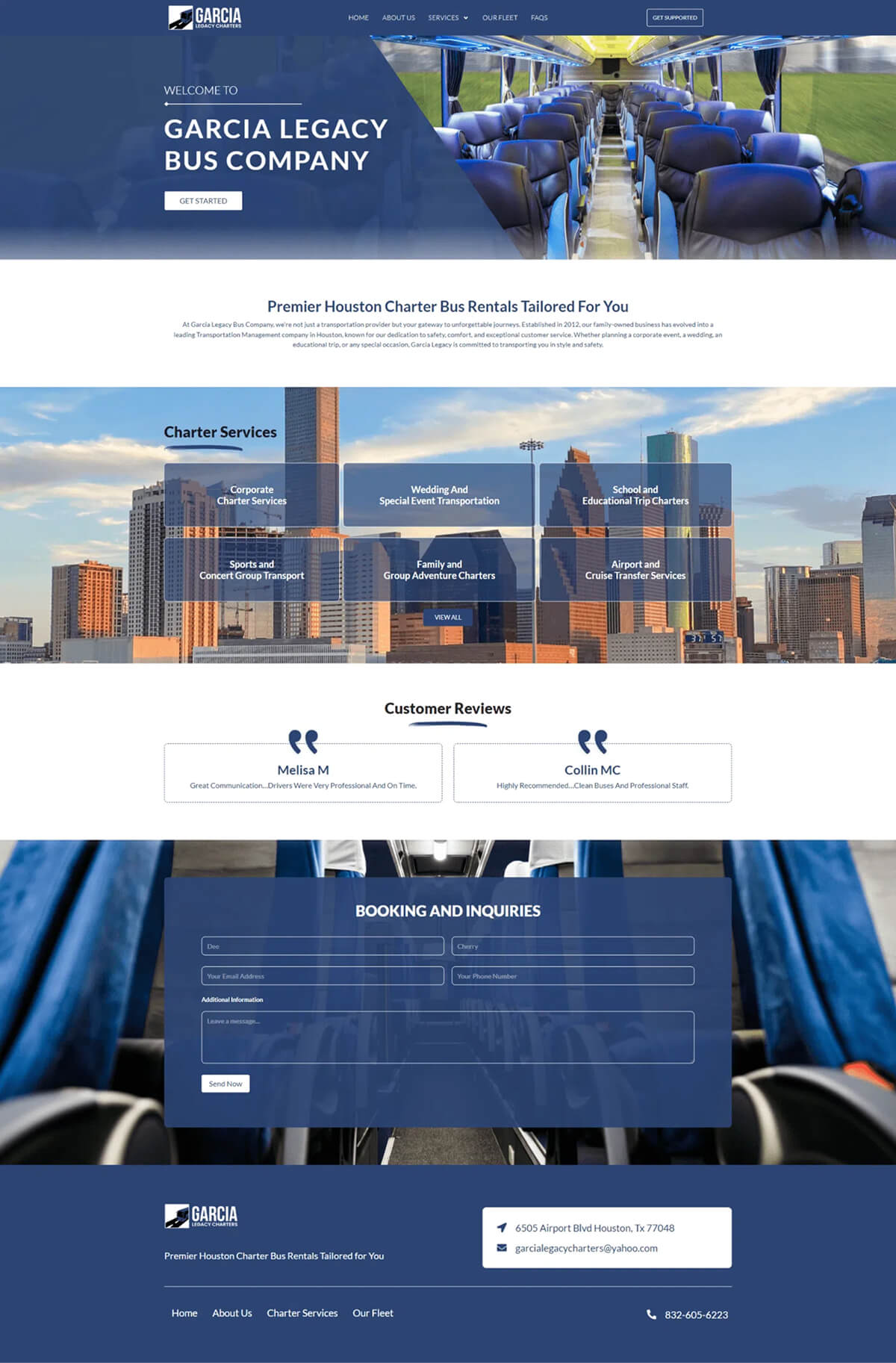
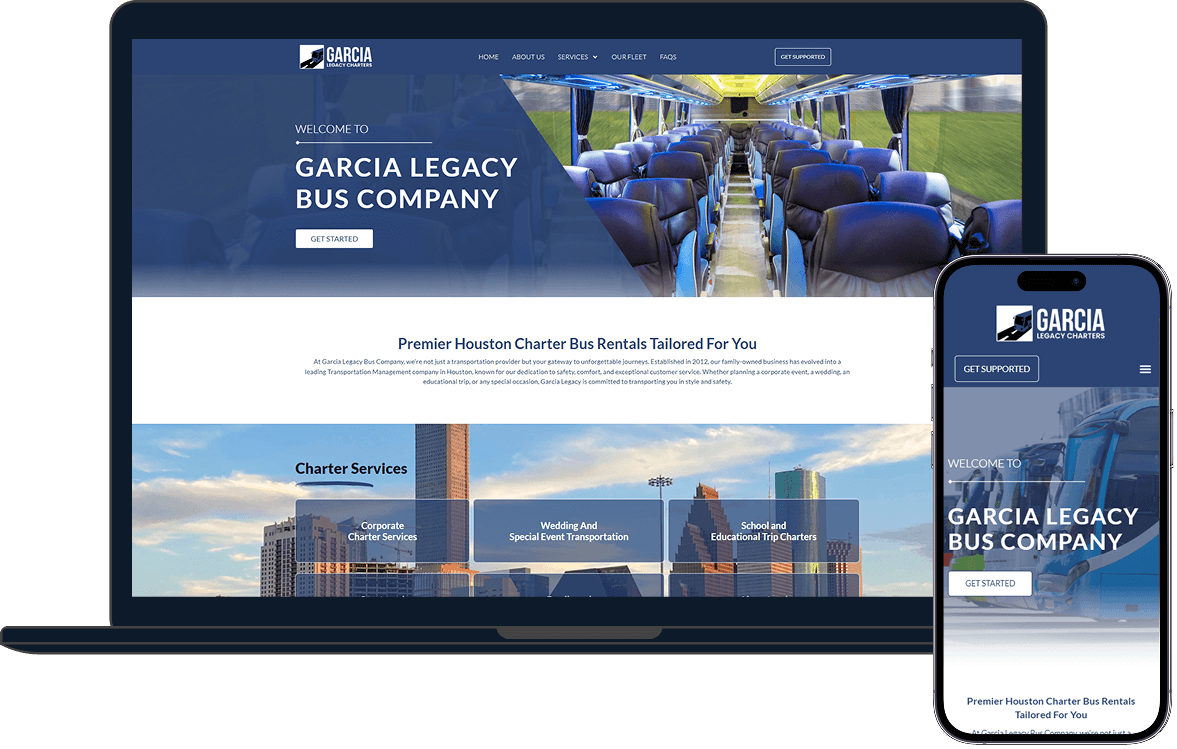
Garcia Legacy Bus Company came to IMPROZ with transportation experience, an existing customer base, and the vehicles needed to serve the market.
But having buses and limousines doesn’t automatically determine how a transportation company should market them.
The same vehicle can serve a wedding, corporate event, group outing, special occasion, or other transportation need. The opportunity was to understand how customers were actually searching for those services and use that intelligence to shape the business’s digital presence.
Before designing the website, IMPROZ researched the transportation market and search behavior surrounding the services Garcia Legacy could provide. Those insights helped us determine how services should be organized, how the sitemap should be structured, and what customers needed to see when they arrived.
From there, we developed the brand identity, content, graphics, and website around that strategy.
The result wasn’t simply a website displaying buses and limos. It was a digital presence organized around the transportation services customers were looking for.
Developed a distinct professional brand identity and logo for Garcia Legacy Bus Company
Researched how customers searched for transportation services and occasions
Used search insights and marketing experience to help define service categories
Built the website sitemap around customer intent rather than simply vehicle inventory
Created original website copy to communicate services, capabilities, and brand positioning
Developed custom graphics consistent with the new visual identity
Designed a responsive website that made transportation options easier to understand and explore
Established a search-informed digital foundation for future marketing
Industry: Transportation & Private Group Transportation
Services Provided:
Brand Development
Logo Design
Search & Market Research
Website Strategy
Website Design
Content Development
Custom Graphics
Search-Ready Information Architecture
Goal:
Create a distinct professional identity for Garcia Legacy Bus Company while using search research and marketing experience to organize its transportation capabilities into services that reflected how prospective customers actually looked for them.
Garcia Legacy had the vehicles and industry experience necessary to provide transportation for many different types of customers and occasions.
That flexibility created an important marketing question:
How should those capabilities be presented to the market?
A bus is an asset. A limousine is an asset.
But customers typically begin with a need.
They may be planning an event, arranging transportation for a group, coordinating business travel, or searching for transportation for a specific occasion.
Simply building a website around a list of available vehicles would have missed much of that intent.
Garcia Legacy also needed a professional identity of its own.
The company required more than a logo placed at the top of a website. The visual identity, messaging, graphics, and digital experience needed to work together to communicate reliability, professionalism, and trust.
For a transportation company, those qualities matter.
Customers aren’t simply selecting a vehicle. They’re trusting a company to move people safely and reliably as part of an event, trip, or important occasion.
The temptation in website development is to begin with appearance.
For Garcia Legacy, we started further upstream.
Before deciding what individual pages should look like, we needed to determine what pages should exist and why.
That meant researching the market, considering search behavior, understanding the company’s capabilities, and translating those findings into an intentional website structure.
The solution required more than designing a professional website. We needed to connect Garcia Legacy’s existing transportation capabilities to the way prospective customers actually understood and searched for those services.
Market research, service organization, brand development, content, and website architecture were planned as one connected system. Each decision helped turn the company’s buses and limousines into a clearer, more marketable transportation offering.
Garcia Legacy needed an identity that communicated reliability and professionalism before a customer ever requested a quote.
We developed a distinct brand and visual direction that gave the company a consistent presence across its logo, graphics, messaging, and website.
This included:
Objective
Create a recognizable transportation brand that communicates professionalism, reliability, and trust.
Customers don’t always begin their search by looking for a particular vehicle. They often begin with the event, trip, group, or transportation problem they need to solve.
We used market and search research to help translate Garcia Legacy’s capabilities into service categories that better reflected those needs.
This included:
Objective
Connect Garcia Legacy’s transportation capabilities to the services prospective customers were actually looking for.
Rather than beginning with layouts, we first determined what information the website needed to contain and how customers should move through it.
The sitemap was developed around the company’s capabilities, identified service opportunities, and the different ways customers entered the transportation market.
We focused on:
Objective
Build a website structure that makes it easy for customers to recognize the right transportation solution for their needs.
Search optimization wasn’t treated as something to add after the website was completed.
The research that informed the service strategy also influenced the architecture, content, and individual pages, creating a stronger foundation for future organic visibility.
This included:
Objective
Create a digital foundation capable of supporting both customer discovery and long-term search visibility.
Garcia Legacy demonstrates an important difference between simply building a website and strategically planning one.
The company already had transportation capabilities.
Our job was to connect those capabilities to a market.
Research helped us understand how customers searched. That intelligence helped organize the services. The services shaped the sitemap. The sitemap informed the content. The brand and design brought everything together into one professional customer experience.
The process looked more like:
Search Research → Service Strategy → Sitemap → Brand → Content → Website
Each decision informed the next.
That created a stronger foundation than beginning with a template and filling it with information afterward.
Garcia Legacy was not built around a single marketing tactic. The brand, service structure, website architecture, content, and search strategy were developed to support one another.
That connected approach helped turn the company’s existing transportation capabilities into a clearer, more professional digital experience built around the way customers actually searched for and evaluated transportation services.
The logo, visual identity, messaging, and graphics gave Garcia Legacy a distinct presence that communicated reliability and trust across the website.
The website was structured around transportation needs and service opportunities rather than functioning as a simple online fleet catalog.
That made it easier for prospective customers to recognize where Garcia Legacy fit their specific situation.
Search research influenced the service categories, sitemap, and content before the site was designed.
Instead of adding optimization afterward, search intelligence helped shape the digital experience from the beginning.
The finished website gave Garcia Legacy more than a polished online presence.
It created a foundation that could support future content, Search Everywhere Optimization, local visibility, service expansion, and ongoing marketing as the business evolved.
The finished Garcia Legacy website demonstrates how research can influence decisions long before a page is designed.
Its service organization reflects customer needs rather than simply inventory. The content explains those offerings in context. The visual identity gives the company a distinct professional presence, while the website brings the strategy together into an experience customers can navigate and understand.
We don’t need to claim unsupported increases in traffic, engagement, conversions, or business growth to demonstrate the value of the project.
The work itself provides the evidence:
Garcia Legacy entered the project with transportation capabilities and customers. It left with a distinct brand and a strategically structured digital presence designed around the market it wanted to serve.
Sometimes the challenge isn’t adding another product or service.
It’s understanding how the market sees what you already offer.
IMPROZ combines research, brand development, content strategy, website design, and Search Everywhere Optimization to build digital experiences around both the business and the people searching for it.
Your website shouldn’t simply explain what you have. It should help the right customers understand why it matters to them.