Competing for remodeling work in central Houston is not easy.
Inside the 610 Loop, homeowners have access to established remodeling companies, general contractors, design-build firms, handymen, directories, and advertisers all competing for attention. Paid search can place a company directly in front of that demand, but in a competitive market, every click comes at a price.
This Houston remodeling business had something many competitors could not simply manufacture through advertising: the owner brought genuine architectural education and professional experience to the work.
The challenge was making that distinction visible.
IMPROZ built the company’s digital presence around that real-world advantage while developing a broader search strategy capable of competing beyond expensive pay-per-click advertising.
The experience demonstrates an important principle behind what IMPROZ now calls Search Everywhere Optimization: when competition is high, businesses need more than rankings or ads. They need a connected body of signals that helps people—and increasingly search and AI systems—understand why this business deserves consideration.
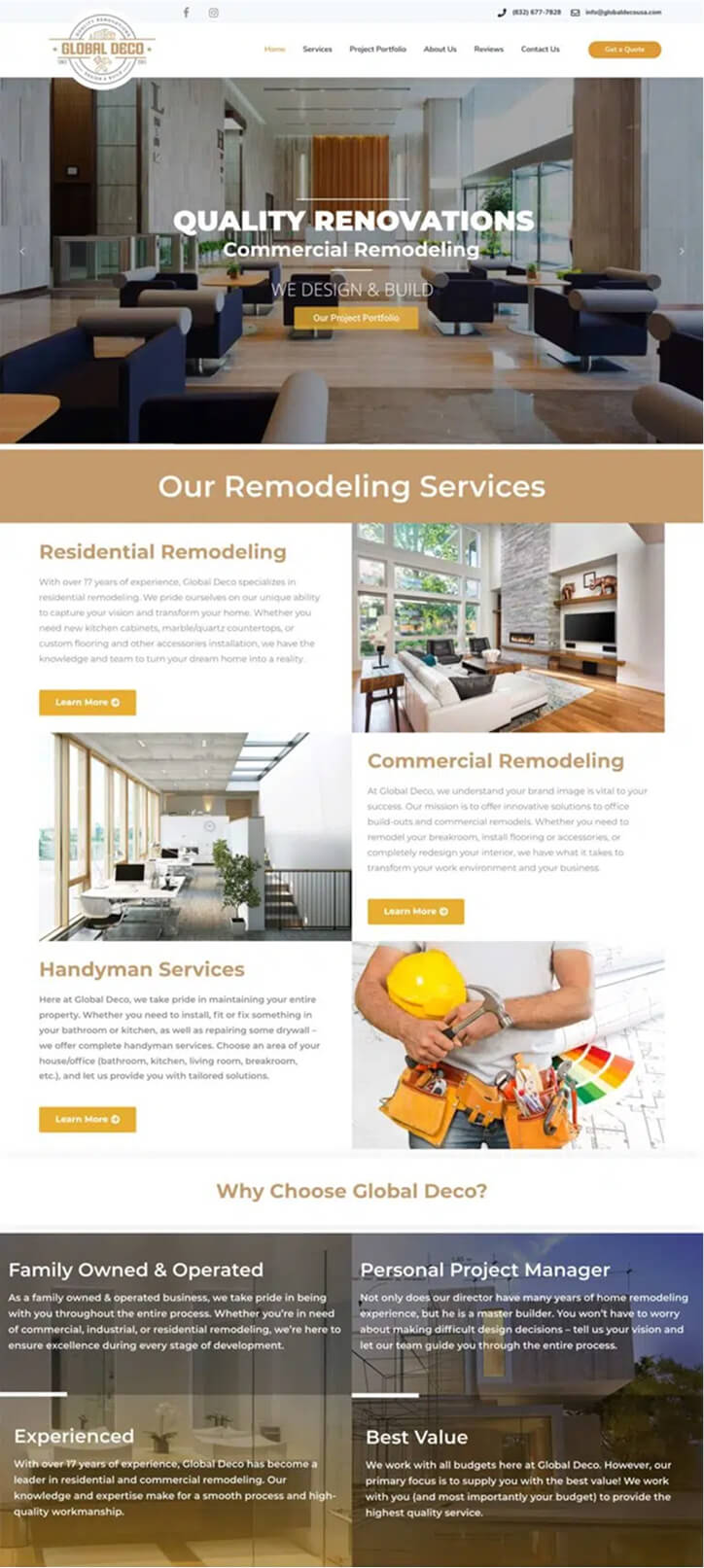
Built a professional digital presence for a remodeling company competing in Houston’s central metropolitan market
Positioned the owner’s architectural education and experience as a meaningful point of differentiation
Created a stronger alternative to competing primarily as another general remodeling or handyman business
Used organic and broader search visibility to reduce strategic dependence on costly paid-search traffic
Developed digital assets capable of continuing to represent the company’s expertise beyond individual advertising clicks
Built a stronger foundation for long-term visibility across search and local discovery
Industry:
Residential Remodeling & Design
Services Provided:
Goal:
Help a Houston remodeling business compete for qualified homeowners inside the 610 Loop by establishing a stronger digital identity, communicating the owner’s architectural expertise, and building sustainable visibility beyond paid advertising alone.
Location was one of the most important factors in this project.
The business was competing inside Houston’s 610 Loop—a dense metropolitan market with substantial competition for residential remodeling and improvement projects.
A homeowner searching for help could encounter established remodeling companies, general contractors, design-build firms, independent tradespeople, directories, map listings, advertising platforms, and national brands before ever reaching this company’s website.
Simply having a website was not enough.
The company needed to communicate why it belonged in that competitive set and why a homeowner should look more closely.
Paid search offered one route to immediate exposure, but remodeling-related searches in a competitive metropolitan market can carry substantial advertising costs.
That creates an important business limitation.
Every lead generated exclusively through PPC depends on continuing to purchase access to the audience.
Advertising could remain useful, particularly for high-intent opportunities, but IMPROZ did not want the company’s visibility to disappear whenever advertising spend stopped.
We needed to build assets that could create and support discovery beyond the paid auction.
The strongest differentiator was not a slogan.
It was the owner’s background.
He was not simply approaching remodeling as a handyman who had expanded into larger projects. He brought legitimate architectural education and professional architectural experience to his understanding of buildings, space, design, and project planning.
That distinction mattered.
But unless the marketing communicated it clearly, a prospect reviewing search results could easily place the company in the same category as dozens of other contractors.
The marketing therefore needed to do more than list services.
It needed to translate genuine expertise into visible market differentiation.
Paid advertising could create exposure immediately.
But every paid click was temporary.
The larger opportunity was to create a digital presence capable of continuing to communicate the company’s expertise, services, location, and positioning whether or not an advertising campaign was active.
That meant treating the website, search visibility, local signals, and content as long-term business assets rather than separate marketing tactics.
Our strategy was built around a simple idea:
Don’t manufacture a reason to choose the company. Make the real reason easier to discover and understand.
The website needed to establish what the company did, but service descriptions alone were not enough.
The owner’s architectural background gave us a stronger positioning foundation.
Rather than presenting remodeling solely as construction work, the digital presence could help prospects understand that additional design knowledge and architectural thinking supported the work.
That changed the competitive frame.
This included:
Objective
Make the owner’s architectural education and experience a visible reason for prospective homeowners to consider the company.
For a service business, geography and service intent have to work together.
The website needed to help search engines and potential customers connect the company with the work it performed and the Houston market it served.
That meant treating local visibility as part of the website and content architecture rather than simply inserting “Houston” into page copy.
We focused on:
Objective
Help search engines and prospective customers understand what the company did, where it operated, and why it was relevant to remodeling searches in central Houston.
Paid search could place the company in front of people actively looking for remodeling services.
But when clicks are expensive, dependence becomes risky.
Instead of treating PPC as the complete customer-acquisition system, we treated it as one component of a larger visibility strategy.
Paid search could capture immediate demand while the website, organic visibility, business identity, and content continued building longer-term value.
This included:
Objective
Use advertising where it created value without requiring the company to purchase every opportunity indefinitely.
The strategic goal became larger than ranking a single page.
We wanted search engines and prospects to encounter consistent evidence about what the company did, where it operated, who was behind it, and what made its approach different.
Today, IMPROZ describes that broader principle as Search Everywhere Optimization.
Search and discovery increasingly happen across traditional search results, local listings, directories, reviews, social platforms, video, AI-generated answers, and other digital environments.
This included:
Objective
Create a broader digital footprint that made the company’s real expertise easier to find, understand, and evaluate across multiple discovery environments.
The strategy did not depend on inventing a marketing angle.
The owner’s architectural education and professional background already existed.
That gave IMPROZ something authentic to build around—an advantage competitors could not easily reproduce by changing headlines or increasing ad spend.
Without context, the company could have been evaluated as one remodeling contractor among many.
By communicating the architectural perspective behind the work, the website gave homeowners another way to compare the company.
The decision could become about capability, planning, design understanding, and experience—not simply price or advertising visibility.
Advertising could help capture existing demand quickly.
Organic search, local visibility, content, and website assets could continue working after an individual campaign or click ended.
Using both reduced the need to treat paid media as the only route to prospective customers.
Location, services, expertise, content, and business identity were more useful when they worked together.
The owner’s background strengthened the positioning.
The website explained the positioning.
Search helped people discover it.
Local signals reinforced geographic relevance.
Paid media could accelerate exposure when appropriate.
Together, those pieces created a stronger system than any one channel could provide on its own.
Competitors can copy headlines.
They can bid on the same keywords.
They can build similar service pages.
They can even imitate an offer.
They cannot easily copy genuine experience.
The owner’s architectural education and professional background gave this business a legitimate strategic asset. IMPROZ’s job was to make that asset visible rather than burying it beneath generic contractor messaging.
A strong website should begin answering questions a prospect would otherwise have to discover later:
Who is this company?
What kind of work does it understand?
Why should I trust it?
How is it different?
Is this the kind of business I want working on my home?
When those answers reinforce one another, the website becomes more than a digital brochure.
It becomes part of the qualification process.
A paid click ends.
A useful digital asset can continue creating value.
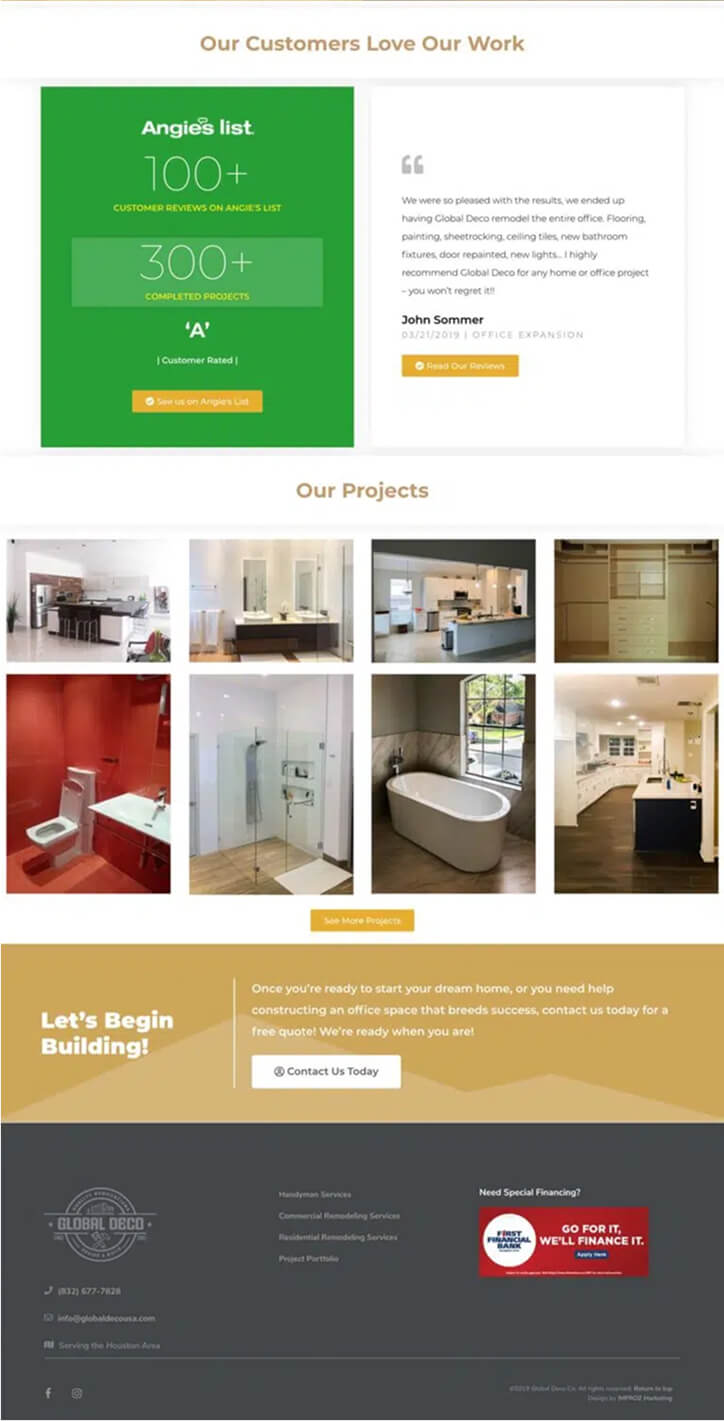
Pages can earn search visibility. Content can establish topical associations. Brand mentions can reinforce recognition. Local signals can strengthen geographic relevance. Project evidence can help prospects evaluate credibility.
The opportunity was not to abandon paid media.
It was to avoid a system where every opportunity had to be purchased again.
PPC still had an important role.
It could create immediate visibility for high-intent searches while the rest of the digital presence supported trust, differentiation, and longer-term discovery.
That made advertising more useful because the click did not arrive at an isolated landing page or generic contractor message.
It arrived within a broader system designed to explain why the company deserved consideration.
The evidence in this case comes from the competitive conditions, the company’s authentic expertise, and the strategic decisions made around them.
The market challenge was real.
The company was competing for remodeling work in central Houston inside the 610 Loop, creating a substantially different competitive environment than serving a lightly contested suburban or peripheral market.
The differentiation was real.
The owner’s architectural education and experience existed independently of the marketing. IMPROZ’s strategy was to surface an authentic business distinction rather than manufacture one.
Paid-search economics influenced the strategy.
The cost of competing through PPC made it strategically important to pursue visibility beyond paid advertising rather than depend exclusively on buying each interaction.
The website became a durable business asset.
Unlike an individual ad impression or click, the digital presence created a place where the company’s services, expertise, positioning, and credibility could continue working together over time.
What this case does not establish is a specific percentage increase in traffic, leads, revenue, or rankings.
Those claims should only be made if historical analytics, advertising records, lead records, ranking evidence, or other documentation supports them.
What we can say confidently is this:
The company had a real competitive advantage. IMPROZ built the digital strategy around making that advantage easier to find, understand, and evaluate in one of Houston’s more competitive remodeling markets.
If your strongest competitive advantage exists inside your business but isn’t clearly visible online, simply buying more traffic may not solve the problem.
IMPROZ builds connected marketing systems designed to make the right businesses easier to find, understand, trust, and choose.