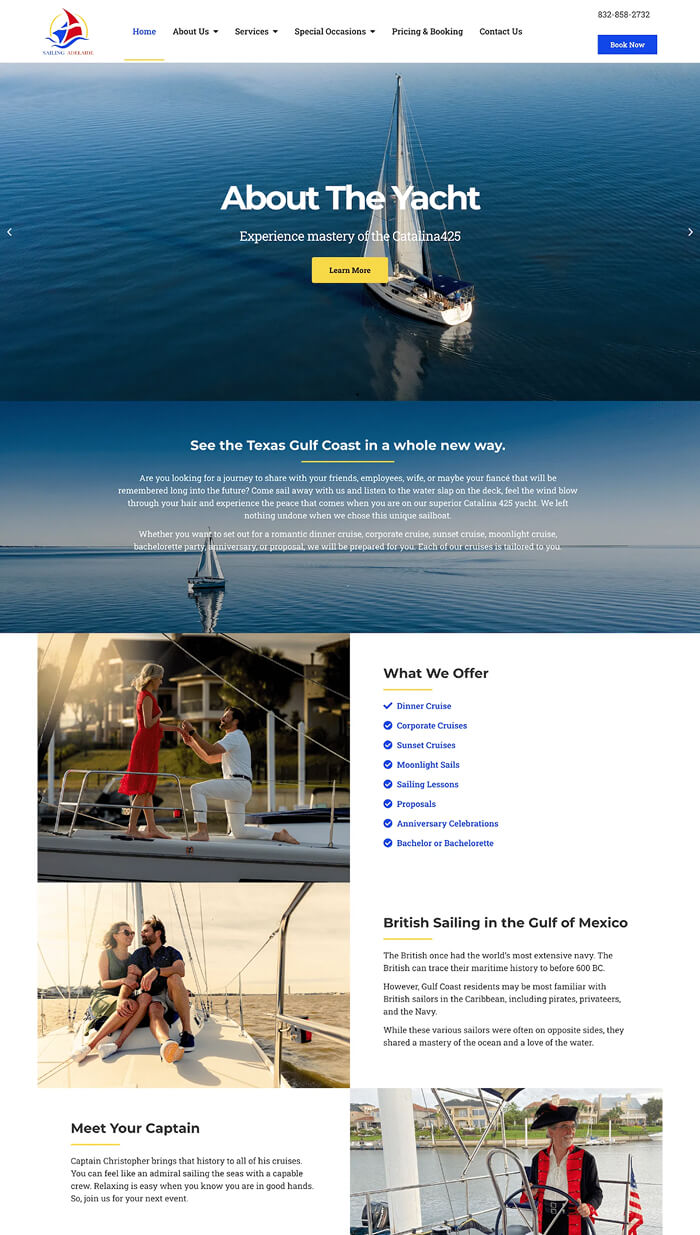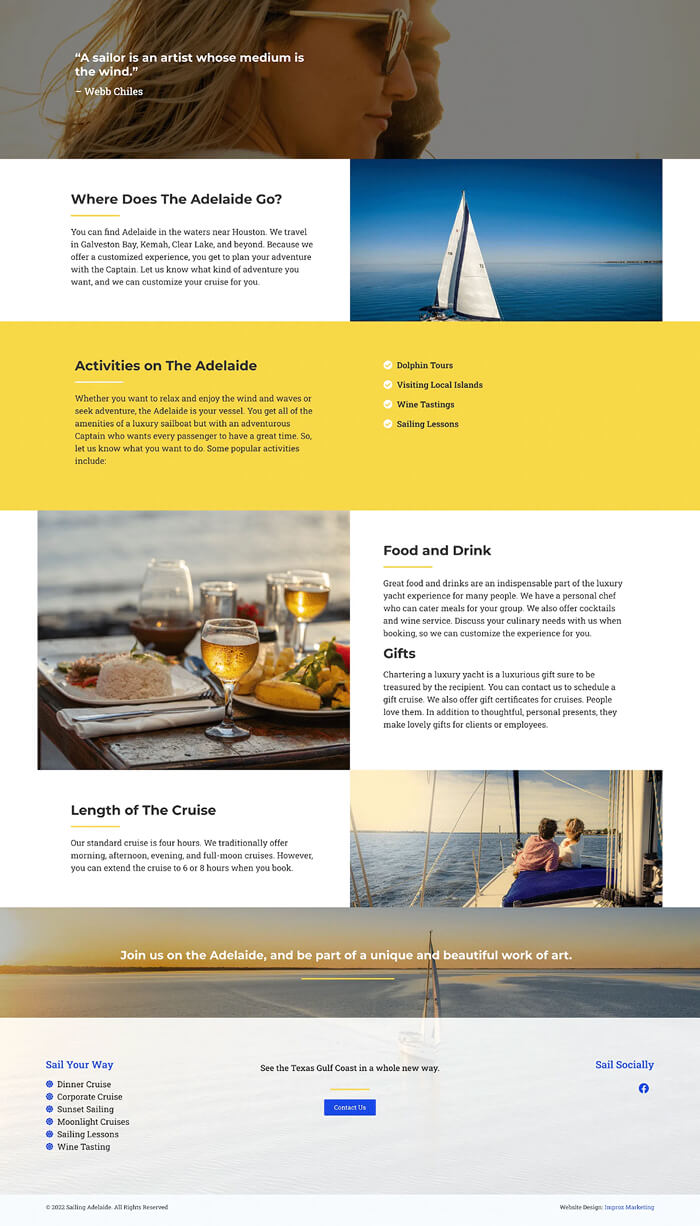
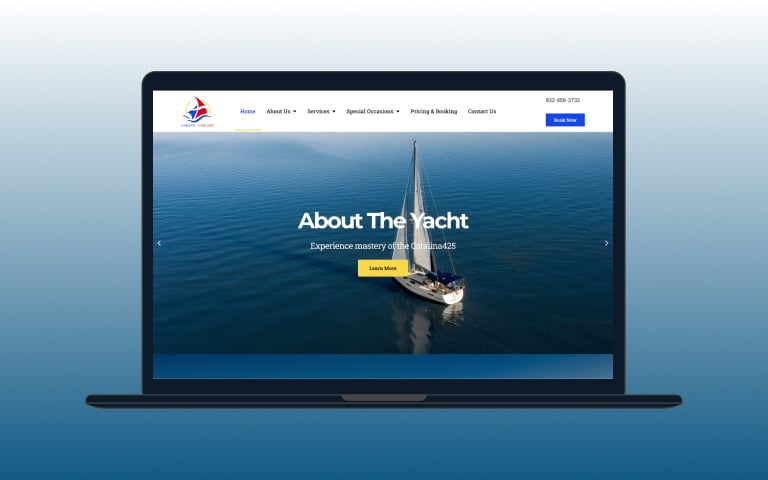
The client already had the most important physical asset: the yacht.
What was less developed was the service model around it.
A private yacht can be used for many different experiences, but customers do not necessarily search for “a yacht” when they begin planning. They search for the occasion, experience, or outcome they want.
Someone may be looking for a sunset cruise.
Another customer may want a private dinner on the water.
A company may be planning a corporate outing. A couple may be looking for a memorable place to celebrate an anniversary or proposal. Another group may be organizing a bachelor or bachelorette experience.
Those are different searches because they represent different customer needs.
IMPROZ researched how people were looking for private boating experiences and used that intelligence to help organize the company’s capabilities into clearer, more marketable services.
The result was more than a website structure.
Search intelligence helped reveal how one physical asset could support multiple services, experiences, audiences, and marketing opportunities.
Researched how customers searched for private yacht and boating experiences
Helped translate one yacht into multiple clearly defined service opportunities
Identified distinct demand around dinner cruises, corporate cruises, sunset cruises, moonlight sails, proposals, anniversaries, and other private experiences
Used those discoveries to shape the website’s internal service-page architecture
Created clearer opportunities for service-specific SEO targeting
Gave Google Ads campaigns more specific customer intent to target
Created additional themes and occasions that could support social media marketing
Helped connect marketing intelligence to the way individual experiences could be packaged and delivered
Built a stronger foundation for marketing the business around customer demand rather than the boat alone
Industry: Private Yacht Charters / Recreational Boating
Services Provided:
Goal: Understand how prospective customers were searching for private boating experiences, translate those insights into clearly defined service offerings, and build a digital marketing system capable of reaching those audiences through the website, SEO, paid search, and social media.
The company already had a yacht capable of supporting private trips and experiences.
But owning the asset did not automatically answer a more important marketing question:
What exactly should the company sell?
Businesses often understand what they are capable of doing without fully understanding how customers think about those capabilities.
A yacht can provide transportation, recreation, privacy, entertainment, celebration, education, or a memorable setting for an important moment.
Those possibilities become much more useful when they are translated into services customers actually recognize and search for.
People do not always begin with the underlying product.
They begin with what they are trying to accomplish.
A customer planning a proposal has a very different intent from someone organizing a corporate outing.
A couple searching for an anniversary experience may evaluate the service differently from a group planning a bachelor or bachelorette event.
Someone interested in a sunset cruise may not think of themselves as searching for the same thing as someone who wants sailing lessons.
The business needed to understand those differences before marketing could become precise.
A single page explaining that the company offered private yacht trips would have left significant demand hidden inside one broad category.
Search research revealed opportunities that could become individual services and individual website paths.
That meant the website architecture itself needed to reflect how customers were entering the market.
The research had value beyond search rankings and advertising.
When a business discovers that people are looking for a particular experience, that information can influence the service itself.
A proposal cruise, for example, raises questions about privacy, timing, atmosphere, photography, champagne, food, and how the crew can support the moment.
A corporate experience may require a completely different approach involving group logistics, activities, destinations, or team-building opportunities.
A dinner cruise requires decisions about food, menus, service, timing, seating, and presentation.
The intelligence could help shape not only how the service was marketed, but how the service was designed.
The strategy began by looking beyond the yacht itself.
We researched the different ways customers were searching for private experiences on the water and used those patterns to help determine how the company’s capabilities could be packaged, presented, and promoted.
Rather than beginning with a generic list of yacht features, IMPROZ looked at customer demand.
The research helped identify different reasons people were interested in private boating experiences.
Those discoveries included opportunities such as:
These weren’t simply keyword variations.
They represented different customer intentions.
Objective
Use search and market intelligence to identify the different experiences customers were already expressing demand for.
Once those patterns were understood, the next step was translating them into clearer services.
The yacht remained the underlying asset, but the customer-facing offer became more specific.
Instead of marketing only “private yacht charters,” the company could present experiences around the reason someone wanted to be on the water in the first place.
This included:
Objective
Turn one broad capability into a portfolio of services customers could more easily recognize, understand, and purchase.
The service research became the framework for the website’s internal pages.
Rather than treating every customer as if they were looking for the same experience, individual services could be given their own context, messaging, and path through the site.
That created a stronger architecture for both people and search engines.
We focused on:
Objective
Build a website structure around the way customers searched for experiences rather than around the yacht alone.
Once the service offerings were defined, marketing became much more precise.
SEO could target specific service intent.
Google Ads could match campaigns and messaging to different searches.
Social content could promote individual experiences, occasions, and use cases instead of repeatedly advertising the same generic yacht charter.
The same intelligence could support multiple channels.
This included:
Objective
Use the service architecture as a shared foundation for search, paid media, social media, and future marketing.
The company did not have to guess at every possible way the yacht might be used.
Search behavior provided evidence about what customers were already interested in.
That gave the business a stronger starting point for deciding which experiences deserved their own service, messaging, and marketing attention.
The yacht itself did not change.
What changed was how its capabilities were understood.
A single physical asset could support different occasions, audiences, price points, service requirements, and promotional opportunities.
That expanded the business conversation from “We have a yacht” to “Here are the experiences we can provide.”
A generic yacht advertisement has to speak to everyone.
A proposal-focused message can speak directly to someone preparing for a life-changing moment.
A corporate message can address companies and groups.
A dinner-cruise message can focus on food, atmosphere, and the experience of dining on the water.
Specific services made more specific marketing possible.
The value of the research extended beyond SEO.
Different customer intents could reveal different expectations about what each service needed to include.
That allowed marketing intelligence to inform service packaging, operations, partnerships, amenities, pricing considerations, and customer experience.
The research could influence the business before the advertising ever began.
Search behavior gave IMPROZ a window into what potential customers were trying to accomplish.
Those signals helped reveal opportunities that might otherwise have remained hidden inside a generic yacht-charter offering.
Finding demand was only the beginning. The company then had to consider what each experience actually required. A proposal is not simply a boat ride with a different page title.
A dinner cruise is not simply a charter with the word “dinner” added. A corporate outing may require entirely different planning, activities, scheduling, and support.
Once the services were defined, the website could give each one an appropriate place.
That made the site more useful to customers while also creating clearer relationships between the company, its services, and the different reasons people searched for them.
SEO, Google Ads, and social media no longer had to operate from a generic description of the business. They could work from the same service architecture. A service discovered through research could become:
a website page → an SEO target → a Google Ads campaign → a social content theme → a customer experience
That is the advantage of a connected marketing system.
The strongest evidence in this project is the service architecture that resulted from the research.
The company began with a yacht and the capability to provide private experiences on the water.
The marketing process identified multiple ways customers were searching for those experiences, including:
Those discoveries became part of the website’s service structure and provided clearer opportunities for SEO, paid advertising, and social marketing.
We do not need to claim that every identified service produced a particular number of leads or a specific amount of revenue without historical data supporting those claims.
The strategic value can be demonstrated more directly:
IMPROZ helped the company move from marketing an asset to understanding the experiences customers were actually looking for.
And that intelligence had implications beyond the website.
Once a company understands what customers want to buy, it can begin asking better operational questions about how those services should be packaged, supported, priced, promoted, and delivered.
Customers do not always describe your business the same way you do.
And business owners do not always arrive with every service, package, or market opportunity already defined.
Sometimes the most valuable marketing work begins by understanding what customers are actually looking for and connecting that demand to what your business is capable of delivering.
IMPROZ combines market research, strategy, website design, Search Everywhere Optimization, paid media, and content to help businesses make those connections.
Good marketing doesn’t only promote the offer. Sometimes it helps reveal what the offer should become.