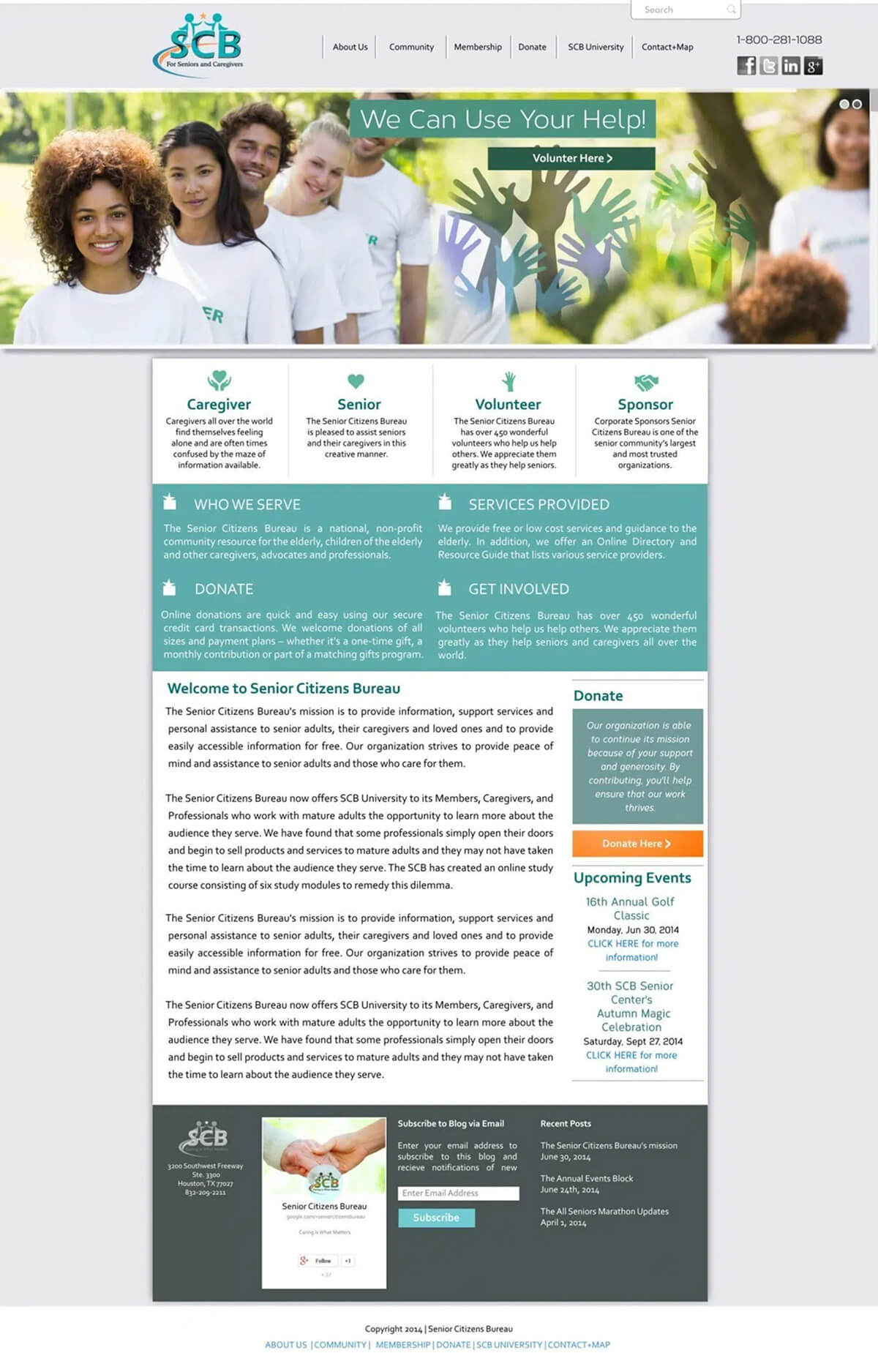
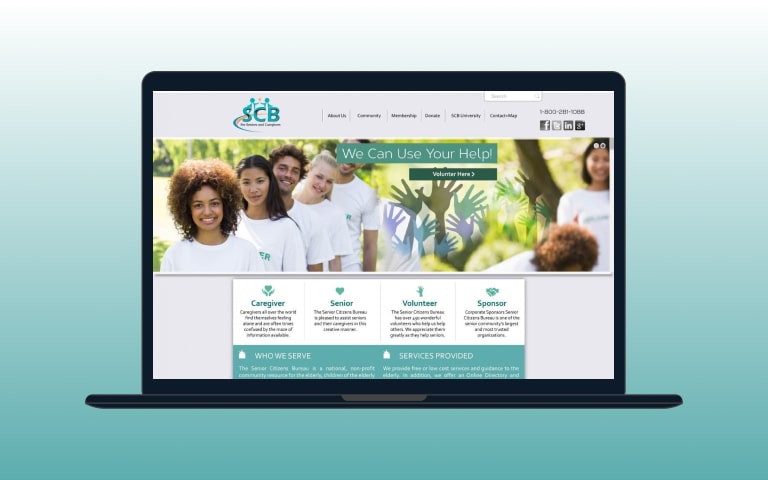
Senior Citizens Bureau was not an established organization looking for a website refresh.
It was a startup nonprofit still shaping how it would present itself to the world.
The founders had ideas. They had a mission. They had plans for what the organization could become.
But like many new nonprofits, much of that thinking still lived internally.
That created a different kind of website project.
The challenge was not simply to create pages and place information online.
It was to help the organization organize its thinking, clarify what it wanted people to understand, determine how it would communicate its value, and begin creating a path from mission to trust to participation.
For IMPROZ, the project reinforced an important lesson:
Sometimes building the website is the moment an idea has to become an organization.
Helped a startup nonprofit organize its ideas into a clearer public-facing structure
Used the website-planning process to clarify mission, audience, priorities, and communication
Helped translate internal thinking into language prospective supporters could understand
Created a more intentional path toward donor trust and participation
Developed a professional website foundation early in the organization’s life
Created a logo to support the organization’s emerging visual identity
Structured the site around what visitors needed to understand before being asked to support the mission
Established a digital foundation that could evolve as the nonprofit itself developed
Industry: Nonprofit / Community Services
Services Demonstrated: Website Strategy, Website Design, Information Architecture, Content Organization, Nonprofit Messaging, Donation/Participation Planning, Logo Design
Goal: Help a startup nonprofit clarify how it would communicate its mission, organize its ideas, build credibility, and create a professional digital foundation for future growth.
Closest Current IMPROZ Equivalent: Premier Website Program
Senior Citizens Bureau predates IMPROZ’s current package structure. Based on the strategic depth of the work, the project most closely aligns with what we now deliver through our Premier Website Program.
The project required more than a basic professional website.
It required thinking through how the organization should explain itself, how its ideas should be organized, what prospective supporters needed to understand, and how the website could create a clearer path toward trust and action.
Startup organizations often begin with strong conviction.
The founders know what they care about.
They know the problem they want to address.
They may already have conversations, notes, plans, and even a formal business plan.
But knowing what the organization means internally is different from explaining it clearly to someone encountering it for the first time.
Senior Citizens Bureau was at that stage.
The organization had ideas.
The website process forced those ideas to become more structured.
Internal planning documents can be useful.
They can define operations, goals, funding assumptions, organizational structure, and future plans.
But the public does not experience an organization through its business plan.
People experience it through the story the organization tells.
That creates a different set of questions:
What problem does this organization exist to solve?
Who does it serve?
Why does the mission matter?
What exactly does the organization do?
Why should someone trust it?
How can someone participate?
Why should someone contribute financially?
A website has to answer those questions in a way people can understand quickly.
That makes website planning an important strategic exercise for a new organization.
Nonprofits face a particularly difficult communication challenge.
A commercial business typically offers a product or service in exchange for payment.
A nonprofit may ask someone to give money without receiving a direct product in return.
That means the organization has to establish a different kind of value.
The donor has to believe:
That trust has to be developed before the ask.
A nonprofit cannot simply place a donation button on a page and expect the button itself to create motivation.
A Donate button is not a fundraising strategy.
Fundraising is not only about whether an organization accepts donations.
It is also about how a potential supporter moves toward that decision.
Someone may first need to understand the mission.
Then the programs.
Then the need.
Then the organization’s approach.
Then how their support contributes.
The website had to support that sequence.
That required thinking not only about content, but about audience behavior.
The website became a tool for helping Senior Citizens Bureau organize itself publicly.
The objective was not to pretend that every detail of the nonprofit had already been finalized.
Early-stage organizations should evolve.
The goal was to create enough clarity to establish a credible path forward.
The website process required the founders to begin separating ideas into understandable categories.
Mission.
Programs.
Audience.
Support.
Participation.
Calls to action.
That exercise is valuable because it exposes ambiguity.
If an idea is difficult to explain on a page, it may still need to be clarified internally.
If two programs sound nearly identical, their roles may need to be better defined.
If the organization cannot explain why someone should support it, the value proposition may need additional work.
The act of designing the site forces those questions into the open.
The founders already understood their own intentions.
The website had to work for someone who did not.
That required information architecture.
What should someone learn first?
What belongs on the homepage?
What deserves its own page?
What information supports trust?
Where should calls to action appear?
What should happen before someone is asked to donate?
This is one of the primary differences between simply publishing content and strategically designing a website.
The goal is not to place all available information online.
It is to organize the information around how people need to understand it.
A founder may naturally describe an organization from the inside out.
How it started.
What the team plans to do.
What resources it needs.
What programs it hopes to create.
A prospective supporter often evaluates it from the opposite direction.
Why should this matter to me?
Who benefits?
What difference can this make?
Can I trust the people behind it?
What will my support help accomplish?
The website had to help bridge those two perspectives.
That meant turning internal plans into public-facing communication.
The donation path needed context.
Before asking someone to give, the organization needed to help that person understand the mission and why participation mattered.
The website therefore needed to build confidence before conversion.
That included presenting the organization professionally, clarifying its purpose, organizing its message, and giving visitors a reason to continue exploring.
The donation opportunity could then exist as the next step in a relationship rather than an isolated request for money.
The website gave Senior Citizens Bureau something valuable before the organization was fully mature:
structure.
Early-stage organizations can have many good ideas at once.
That can become a problem when everything feels equally important.
The website process created boundaries.
Every page needed a purpose.
Every section needed a reason to exist.
Every call to action needed a next step.
Every message needed an audience.
That forced the organization to make choices.
Those choices did not need to remain permanent.
In fact, they probably should not.
A startup nonprofit should learn, adapt, and refine its approach over time.
But creating an early digital structure gives the organization something concrete to improve.
Without that structure, ideas can remain abstract for much longer.
This is what made the project more than a design assignment.
Senior Citizens Bureau was not simply deciding what colors and images to place on a website.
It was thinking through how the organization would present itself publicly.
That required decisions about:
Those are strategic questions.
The website gave the organization a practical environment in which to answer them.
For a startup nonprofit, the website can become one of the first places where scattered ideas are forced into a coherent system.
That process helps reveal what is clear and what still needs development.
The benefit exists even before substantial traffic arrives.
The act of building the site itself creates clarity.
Information architecture is not only a technical web-design task.
It is a communication discipline.
Deciding what belongs together, what comes first, and what deserves emphasis is part of deciding how the organization should be understood.
For Senior Citizens Bureau, that made architecture a strategic tool.
Supporters needed a reason to care before they were asked to contribute.
That meant the website needed to create a sequence:
understand the mission → understand the need → understand the organization → develop trust → see how to participate → take action
The donation path was part of a larger communication journey.
The logo helped Senior Citizens Bureau begin presenting itself with greater consistency and professionalism.
For a new nonprofit, that can matter.
People may be encountering the organization for the first time.
Visual consistency helps reinforce the sense that the organization is intentional and real.
But the visual identity worked best because it sat inside a clearer strategic structure.
Senior Citizens Bureau illustrates an important distinction in IMPROZ’s current website programs.
A Premier project is not defined simply by having more pages than a Booster project.
It is defined by greater strategic depth.
The organization may need help thinking through:
Senior Citizens Bureau required that kind of thinking.
The nonprofit was still taking shape.
That meant the website could not simply reflect an already-finished communication system.
The website helped create one.
Senior Citizens Bureau is an older IMPROZ project, and the original case-study page contains very little written strategic documentation.
We are therefore not presenting reconstructed analytics, donation totals, traffic growth, or unsupported performance claims.
What we can directly support from the project is the work itself.
IMPROZ:
The value of this case is not a historical conversion percentage.
It is what the website-development process helped the organization do.
Many founders think of the website as something that comes after everything else.
First the business plan.
Then the organization.
Then the programs.
Then the marketing.
Then the website.
But for a startup, particularly a nonprofit, building the website earlier can be useful precisely because everything is not finished yet.
The website forces ideas into public language.
It forces priorities.
It forces structure.
It forces the organization to think about people outside the founding team.
And it forces one of the most important questions any nonprofit has to answer:
Why should someone else believe this is worth supporting?
The answers may change.
They should.
Organizations learn.
Programs evolve.
Audiences respond.
Priorities become clearer.
But an early website provides a starting structure from which that learning can happen.
Sometimes the website does more than communicate the organization.
Sometimes building the website helps build the organization itself.
You may already have the idea.
You may already have the mission.
You may even have the business plan.
But turning those ideas into something other people can understand, trust, and support requires another level of thinking.
A strategic website project can help organize that work.
Senior Citizens Bureau was still becoming an organization when IMPROZ began helping shape its digital presence.
The website gave those ideas structure.
If you are building something new and need more than a collection of pages, IMPROZ can help you turn your thinking into a clearer digital system.