Texas Eco Blasting did not come to IMPROZ because the business lacked experience.
It came to us because the business was capable of more.
The company had already built a residential customer base largely through referrals. It had industry experience, specialized blasting equipment, and the operational capability to perform more demanding work.
The next goal was commercial.
That created a different marketing problem.
Texas Eco did not simply need more customers from the market it already served. It needed to present itself credibly to a larger type of buyer and create a direct path for commercial prospects to discover what the company could do.
For IMPROZ, the project reinforced an important growth principle:
A business can become ready for its next market before its marketing does.
Helped an established residential service business reposition itself toward commercial opportunities
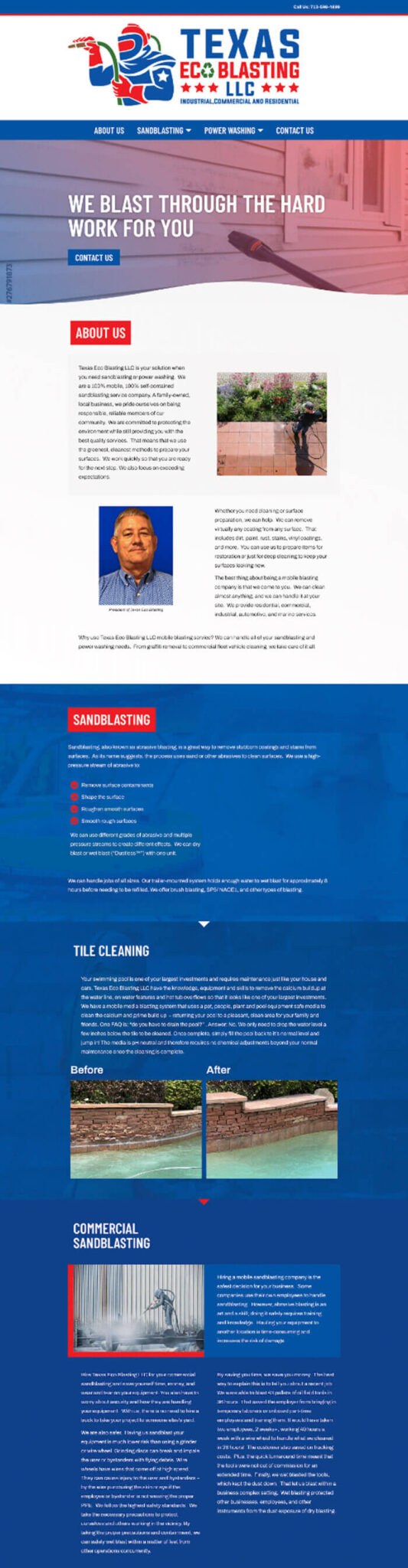
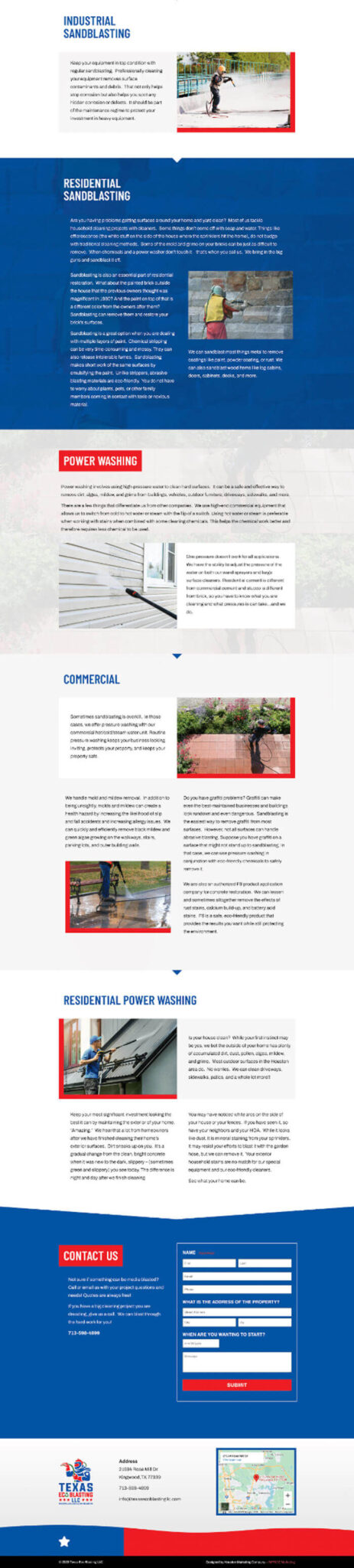
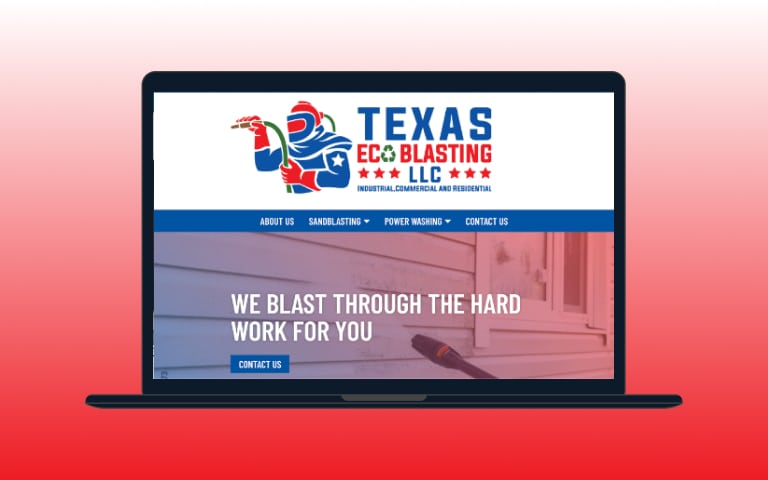
Built a focused professional website designed around the market Texas Eco wanted to enter
Made specialized blasting equipment and higher-level capabilities more visible to prospective customers
Created a right-sized digital foundation rather than overbuilding the website
Developed the site specifically to support paid advertising and commercial lead generation
Launched targeted Google Ads as the primary traffic and demand-capture channel
Expanded the company’s exposure beyond its existing referral-driven residential customer base
Created a scalable digital platform that could support future growth as the commercial side of the business developed
Industry: Specialty Blasting / Surface Preparation
Services Demonstrated: Website Design, Commercial Positioning, Conversion-Focused Web Strategy, Google Ads
Goal: Help an established residential service provider present its advanced capabilities professionally and begin pursuing commercial customers through a focused website and paid-search campaign.
Closest Current IMPROZ Equivalent: Booster Website Program
Texas Eco’s project predates the current IMPROZ package structure. Based on its focused scope, practical website architecture, commercial credibility requirements, and advertising-ready design, the project most closely represents the type of work we now deliver through our Booster Website Program.
Texas Eco had already demonstrated that it could operate successfully in the residential market.
Much of that business came through referrals.
That model had helped the company establish itself, but the owner saw a larger opportunity.
He had invested in specialized, high-end blasting equipment and had enough experience to pursue commercial projects.
The capability existed.
The digital presence did not.
Someone evaluating Texas Eco online could not yet see the full scale of what the business was equipped to do.
That created a gap between the company Texas Eco had become and the company its marketing presented.
Moving from residential work into commercial projects is not simply a matter of asking existing customers for larger jobs.
The buyer changes.
The expectations change.
The questions change.
Commercial prospects may care more heavily about:
Texas Eco’s residential referral network could continue producing business, but it was not designed to communicate those signals to commercial buyers.
The company needed marketing built around the market it wanted next.
One of Texas Eco’s strongest assets was its equipment.
The company had made the investment.
The owner understood how to use it.
The equipment gave the business the ability to perform work that could support a broader and potentially more valuable commercial market.
But operational capability does not automatically become marketing value.
If prospective customers do not know the capability exists, it cannot influence their decision.
Our job was to turn that equipment from something Texas Eco owned into something the market could understand as a reason to consider the company.
Referrals had value and had already helped support the business.
But entering a new market meant reaching people outside the existing customer network.
Texas Eco needed a way to appear in front of prospects actively looking for the services it could provide.
Waiting for residential referrals to gradually create commercial relationships would leave too much of the growth strategy to chance.
The company needed a deliberate acquisition path.
The strategy was not to replace the residential business.
It was to create a focused marketing system capable of opening another door.
Texas Eco already had the equipment and experience.
We needed to align its digital presence with those capabilities and put that message in front of commercial prospects.
One of the easiest mistakes in website design is building entirely around what a company has historically been.
Growth sometimes requires something different.
The website also needs to support what the company is becoming.
For Texas Eco, that meant giving greater prominence to the equipment, capabilities, and services relevant to larger opportunities.
The objective was not to invent a commercial company that did not exist.
It was to make the company’s existing commercial capability easier to recognize.
Good positioning does not manufacture strength.
It identifies the strengths that already exist and communicates them to the right market.
Texas Eco did not need a massive website architecture to begin pursuing commercial work.
It needed a professional, focused platform that could:
That project type aligns closely with what IMPROZ now calls the Booster Website Program.
Booster is designed for businesses that need a professional digital foundation with practical scope—not an unnecessarily large website simply for the sake of size.
Texas Eco demonstrates another use for that model.
Booster is not only for a company just getting started.
It can also make sense for an established business that needs a focused digital platform for a specific stage of growth.
For Texas Eco, the equipment was not a background detail.
It helped explain why the company was capable of performing the type of work it wanted to pursue.
The website therefore needed to communicate more than a basic list of blasting services.
It needed to help prospects understand that Texas Eco had invested in the technology and equipment required to perform specialized work.
That strengthened the bridge between:
“We would like commercial projects”
and
“We are equipped to perform commercial projects.”
The website and advertising were planned to work together.
Texas Eco was entering a market where it did not yet have the same referral history it had developed residentially, so Google Ads gave the company a direct way to compete for attention.
Rather than hoping commercial prospects would eventually discover the business, paid search allowed Texas Eco to appear in front of people actively looking for relevant blasting services.
That meant the website had an immediate conversion responsibility.
When someone clicked an advertisement, the page needed to quickly reinforce:
The website established the commercial-facing foundation.
Google Ads drove qualified search activity toward it.
Together, they created a simple acquisition path:
commercial search → targeted ad → focused website → inquiry
For a business testing or entering a new market, that kind of direct path can be more useful than launching an unnecessarily complicated marketing system all at once.
Texas Eco did not need to reinvent its operation.
It needed its marketing to catch up with its operation.
The owner already had industry experience.
The equipment had already been purchased.
The company already knew how to perform the work.
Those are substantial business assets.
What was missing was a digital system that presented those assets to the commercial market.
The focused website made the capability visible.
The positioning made the commercial direction clear.
Google Ads created immediate access to relevant search demand.
And because the project stayed intentionally focused, Texas Eco could pursue the new market without first committing to an oversized website or unnecessarily complex marketing program.
That is the larger lesson:
Moving a business to the next level does not always require doing everything. It requires identifying what is preventing the next level and solving that problem deliberately.
A business’s website should reflect reality.
But reality includes more than yesterday’s customer base.
It can also include the company’s current capabilities and strategic direction.
Texas Eco already had the equipment and experience necessary to pursue larger opportunities.
The website helped align the company’s public presentation with that reality.
That allowed the business to approach commercial prospects from a stronger position.
Owning advanced equipment is valuable only when the right customers know it is available.
Google Ads helped close that gap.
The campaign could put Texas Eco in front of people expressing actual service intent rather than depending entirely on awareness among existing residential contacts.
That is one of the strongest uses of paid search:
connecting existing business capability with existing market demand.
Texas Eco did not require every marketing channel available.
The immediate objective was specific:
enter commercial work.
A focused website plus Google Ads provided a direct way to pursue that goal.
The website created credibility.
Paid search created exposure.
The equipment and experience supplied the underlying reason to choose the company.
Each component had a defined job.
That is often more effective than adding channels simply because they exist.
Marketing growth is often described as increasing volume.
More traffic.
More leads.
More customers.
But growth can also mean changing the type of opportunity the business attracts.
Texas Eco wanted to expand from primarily residential work into commercial work. That meant success was not simply about generating a larger quantity of the same inquiry.
The marketing needed to help the business reach a different segment of the market. That required positioning the company around what made it capable of serving that segment.
Texas Eco illustrates an important use case for the Booster Website Program.
A focused website is not synonymous with an unsophisticated business.
Sometimes the opposite is true.
Texas Eco already possessed sophisticated equipment and meaningful operating experience.
The website simply needed to perform a focused job:
make those capabilities visible to a new market and support the advertising campaign designed to reach it.
That is exactly where right-sized website architecture can make sense.
The business gets the professional foundation it needs without paying for complexity that does not yet advance the goal.
Then, as the new market develops, the digital system has somewhere to grow.
Texas Eco Blasting is an older IMPROZ project, so we are not reconstructing historical advertising metrics or presenting unsupported performance percentages.
What we can directly support from the work is the strategic transition and execution.
Texas Eco:
The durable evidence from the case is not a reconstructed click-through rate or lead count.
It is the alignment between the company’s growth objective and the marketing system designed to support it.
Business growth sometimes creates an unusual situation.
The company improves internally before the market can see the improvement.
You buy better equipment.
You gain more experience.
You expand your capabilities.
You build a stronger team.
You become able to take on larger work.
But the website, messaging, customer base, and marketing channels still reflect an earlier version of the company.
That can create a ceiling.
Texas Eco did not lack the ability to pursue commercial work.
Its marketing simply had not yet been built for that audience.
The project was about closing that gap.
A business can outgrow its current market before it outgrows its capabilities. When that happens, the marketing needs to catch up.
Maybe your business is already established.
Maybe referrals have carried you a long way.
Maybe you have invested in better equipment, stronger capabilities, or a more experienced team.
And maybe the customers you want next are different from the customers who helped you get here.
You may not need to rebuild everything.
You may need the right website, sharper positioning, and a direct way to reach the market you’re ready to serve.
Texas Eco already had the capability.
IMPROZ helped build the digital foundation around where the business wanted to go next.
If your business is ready for its next stage, your marketing should be ready too.