
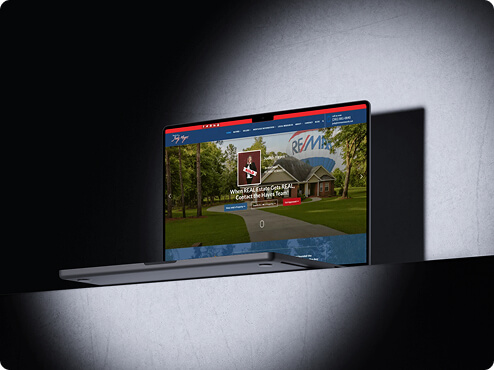
Real estate is one of the most competitive local industries there is.
Almost everyone knows a Realtor. Many people have a friend, neighbor, or family member with a license. That makes broad positioning especially difficult for an individual agent trying to stand out.
Judy Hayes understood something important from the beginning:
She did not need to sell to everyone. She needed to define the market she actually wanted to serve.
Rather than positioning Realty by Judy Hayes as another general “Houston Realtor” brand, the strategy focused on the specific communities and areas where Judy wanted to build relationships and do business.
That focus helped shape the website, the local search strategy, and the way prospective clients encountered her online.
The result was a clearer market position built around relevance instead of reach for its own sake.
Positioned Realty by Judy Hayes around the markets she actually wanted to serve.
Built the website around defined local coverage areas rather than broad Houston-wide messaging.
Created a clearer path for buyers and sellers searching in specific communities.
Strengthened local SEO opportunities by targeting smaller cities and towns with more relevant geographic intent.
Reduced reliance on generic real estate positioning in an already overcrowded market.
Built a website designed to help prospective clients discover Judy while actively searching, rather than relying only on outbound prospecting.
Created a stronger foundation for relationship-based lead generation through search and local visibility.
Industry: Residential Real Estate
Services Provided: Website Strategy and Design, Local Market Positioning, SEO Strategy, Geographic Targeting, Messaging, Lead Generation Strategy
Goal: Build a more focused digital presence around the communities Judy wanted to serve and create a stronger path for prospective buyers and sellers to find her online.
Judy worked with multiple RE/MAX Rewards offices, including locations in Porter, Huffman, and Waller.
Her coverage areas included communities such as Atascocita, Crosby, Hockley, Humble, Liberty, Splendora, Waller, Cleveland, Dayton, Huffman, Kingwood, Porter, and Tomball.
That geographic clarity became an important part of the strategy.
The opportunity was not to compete with every agent across Houston.
It was to make Judy more relevant in the communities where she had the strongest natural fit.
Real estate professionals face a problem that few industries experience at the same scale.
The competition is everywhere.
There are large brokerages, independent agents, high-volume teams, referral networks, listing portals, and countless individual Realtors competing for attention.
Many agents respond to that pressure by trying to appeal to everyone.
Anyone buying a home.
Anyone selling a home.
Anywhere in the region.
That approach can make the marketing broader while making the brand less distinctive.
Judy’s strength was that she already knew the kind of business she wanted.
Houston is a massive and highly competitive market.
Trying to rank broadly across a city that size can put an individual Realtor against major brokerages, established teams, listing platforms, and companies with much larger marketing budgets.
That did not mean Judy needed to abandon Houston-area opportunity.
It meant the strategy needed to become more specific.
The website could focus on the smaller cities and communities where Judy actually wanted to work and where local relevance could become an advantage.
Instead of trying to dominate one enormous market, the site could build visibility around a collection of more focused local markets.
A Realtor’s website should not simply list every place the agent is technically willing to work.
It should support the business the agent wants to build.
For Judy, that meant defining the geographic areas that mattered most and making them visible in the website structure and messaging.
That helped align marketing with business strategy.
The question was not:
Where could Judy possibly sell a house?
The better question was:
Where did Judy want to build recognition, relationships, and recurring business?
Many Realtors spend enormous amounts of time looking for the next opportunity.
Cold calling.
Following up on purchased leads.
Prospecting through lists.
Networking constantly.
Chasing anyone who might be considering a transaction.
Those activities can still have a role, but they are very different from building a digital presence that helps prospective clients find the agent first.
That was the longer-term opportunity.
Build visibility where Judy wanted to work so people already searching in those markets could discover her.
The strategy started with focus.
Before thinking about traffic, rankings, or lead volume, the website needed to answer a more fundamental business question:
What market should Realty by Judy Hayes actually own?
Judy’s coverage areas were clearly identified and incorporated into the website.
These included:
Atascocita, Crosby, Hockley, Humble, Liberty, Splendora, Waller, Cleveland, Dayton, Huffman, Kingwood, Porter, and Tomball.
That created a much stronger geographic signal than simply describing Judy as a Realtor serving the greater Houston area.
The market became tangible.
Potential customers could immediately recognize whether Judy worked in the community they cared about.
Smaller cities and communities created a different SEO opportunity.
Instead of fighting for the broadest and most competitive real estate searches in Houston, the website could align with more specific local intent.
Someone searching for real estate help in Porter, Huffman, Waller, Kingwood, Humble, or another defined community is expressing a more focused need than someone performing a generic Houston-wide search. That gave the website a better opportunity to communicate direct relevance.The strategy was not to avoid competition.
It was to compete more intelligently.
The website was structured to support Judy’s preferred markets instead of presenting an undefined service area.
That made the digital experience more consistent with the way she wanted to operate.
Geography was not treated as a footnote.
It became part of the positioning.
The site helped communicate that Judy understood these communities and intentionally worked within them.
The long-term marketing objective was not simply to generate more names.
It was to create more opportunities for the right people to discover Judy while they were already looking for real estate help.
That changes the relationship.
A cold prospect has to be convinced to pay attention.
A search prospect is already looking.
The website’s job was to make Judy visible, relevant, and credible at that moment.
The strategy worked because it aligned the marketing with Judy’s actual business priorities.
She was not trying to become the Realtor for everyone.
She was trying to become more recognizable and relevant within the markets where she wanted to work.
That clarity improved the entire marketing system.
The website could speak more specifically.
Local SEO could focus on defined communities.
Visitors could understand where Judy worked.
And the brand no longer had to compete only on generic real estate messaging.
The central advantage was focus.
The narrower the fit between the agent, the geography, the client, and the message, the stronger the marketing becomes.
That matters especially in real estate, where almost every agent is competing with someone the prospect already knows.
udy’s defined service areas gave the brand a clearer place in the market.
Instead of presenting herself as one more Realtor serving an enormous metro area, she could communicate a deliberate local footprint.
That made the business easier to understand.
Competing for broad Houston real estate searches can be difficult for an individual agent or small team.
Smaller communities created more specific opportunities.
The website could align with searches tied to places such as Porter, Huffman, Kingwood, Humble, Waller, and other markets Judy wanted to serve.
That made SEO more connected to the actual business strategy.
A focused website can begin the relationship before the first phone call.
A prospective buyer or seller can discover the agent, understand where they work, review the brand, and begin forming an impression before making contact.
That is very different from initiating every relationship through outbound prospecting.
The website becomes part of the introduction.
There is an upfront investment in creating the website, positioning, local content, and search presence correctly.
But the long-term objective is valuable.
Instead of always searching for the next prospect, the business can create more opportunities for qualified prospects to find the agent. That does not eliminate networking, referrals, or outbound sales.
It creates another channel.
One built around being discovered by people who are already looking.
The Realty by Judy Hayes website clearly documented a defined service footprint rather than a broad, undifferentiated Houston-area position.
The site identified specific coverage areas including Atascocita, Crosby, Hockley, Humble, Liberty, Splendora, Waller, Cleveland, Dayton, Huffman, Kingwood, Porter, and Tomball.
It also connected Judy with RE/MAX Rewards offices in Porter, Huffman, and Waller.
That visible geographic structure supports the central strategy behind the project:
Define the market first, then build the marketing around it.
The project does not prove that every Realtor should target the same type of geographic structure or that smaller markets automatically produce rankings.
It demonstrates a more durable principle.
A Realtor can often create a stronger competitive position by focusing on the markets where the business has the best natural fit rather than trying to compete everywhere at once.
In real estate, broad reach can feel attractive.
More cities.
More buyers.
More sellers.
More possible transactions.
But more is not always better.
If the brand is trying to speak to everyone, it can become difficult for anyone to understand why they should choose that particular agent.
The stronger starting point is often clarity.
What communities do you actually want to serve?
Where do you already have relationships?
What markets fit your experience and network?
Where can your brand become locally recognizable?
For brokers, teams, and agents with enough marketing flexibility to build their own presence, those questions can shape a much stronger long-term strategy.
A focused website and search presence require an upfront investment.
But the endgame can be much more rewarding:
More opportunities to build relationships with people who are already searching for the kind of real estate help you want to provide.
