
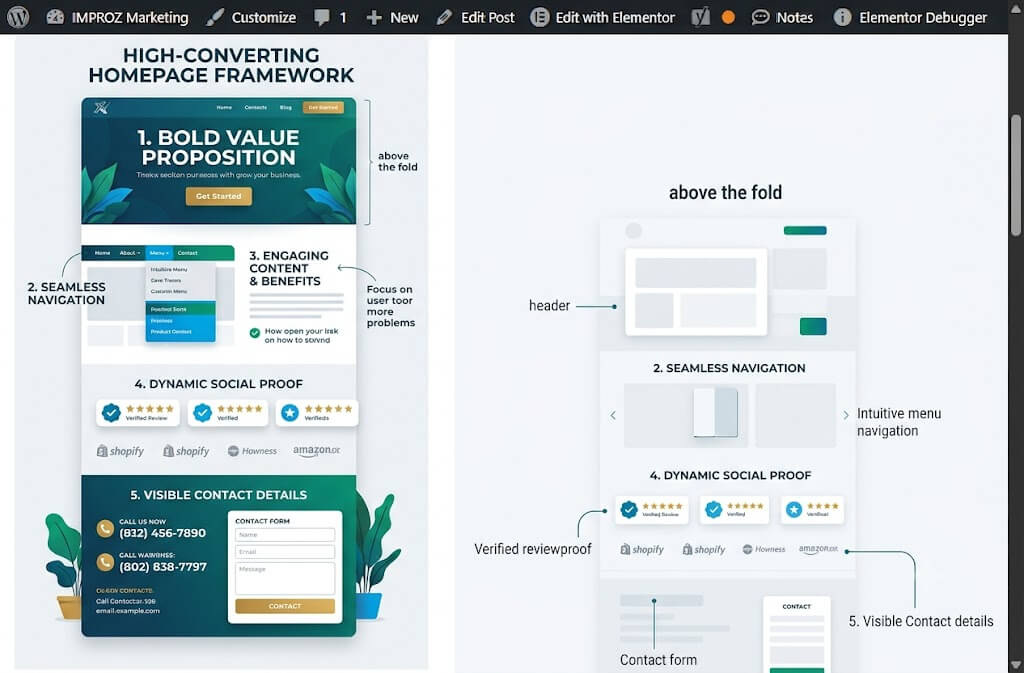
A business website’s home page serves as its virtual welcome mat. When a page feels confusing or outdated, visitors leave immediately; when it provides a frictionless experience, visitors stay and convert. Enhancing an online presence requires implementing strategic layout elements that build trust and drive measurable business growth.
In the past, a standard digital storefront simply needed basic contact information and a list of services to succeed. Today, search behaviors, mobile screens, user expectations, and AI-driven platforms dictate how content must be prioritized.
Design Element | The Old Way | The New Way |
| Above the Fold | Dense paragraphs, generic imagery, hidden navigation. | High-impact headlines, immediate clarity, and bold primary actions. |
| User Trust | Text-only generic reviews hidden on a separate page. | Verified social proof, embedded video testimonials, and dynamic case studies. |
| Product Value | Long bulleted lists detailing technical specifications. | Value-first messaging addressing specific customer pain points. |
To turn casual traffic into qualified leads, ensure a home page addresses these critical structural components:
Do not force potential buyers to hunt for a way to get in touch. Keep phone numbers, email addresses, physical storefront locations, and operational hours highly visible. Placing these details cleanly within the global header or footer ensures accessibility from any point on the site.
“Above the fold” refers to everything a visitor sees before scrolling down. This premium real estate must feature a bold, definitive headline explaining exactly what the business offers, accompanied by an unmistakable, frictionless primary Call-to-Action (CTA)—such as a scheduling form or a direct “Get Started” button.
Many businesses focus exclusively on what they sell rather than how it helps. Web copywriting needs to shift toward user benefits. Explicitly highlight how a service simplifies life, reduces costs, or solves a primary problem for the client.
Website layouts should feel intuitive. Visitors looking for deeper company history, specific portfolios, or transparent pricing must find those specific pathways clearly marked without distracting from the primary homepage CTA.
Static, anonymous pull-quotes no longer build trust. Modern validation requires authentic customer endorsements, video testimonials, industry certifications, or direct links to case studies to give prospective buyers the confidence to convert.
Modern design is not just about aesthetics; it is about performance, speed, and mobile responsiveness. If a layout fails to load instantly or looks distorted on a mobile screen, potential clients will bounce before reading a single headline.
Building a high-performing digital asset requires a strategic blend of conversion rate optimization (CRO) and clean technical development. Discover how a tailored website design approach or website redesign can modernize an online presence. For a detailed assessment of a current layout, explore our website packages or reach out directly via our contact page.